EMEA ICG Dosing for Cervical Cancer

  • Intro:

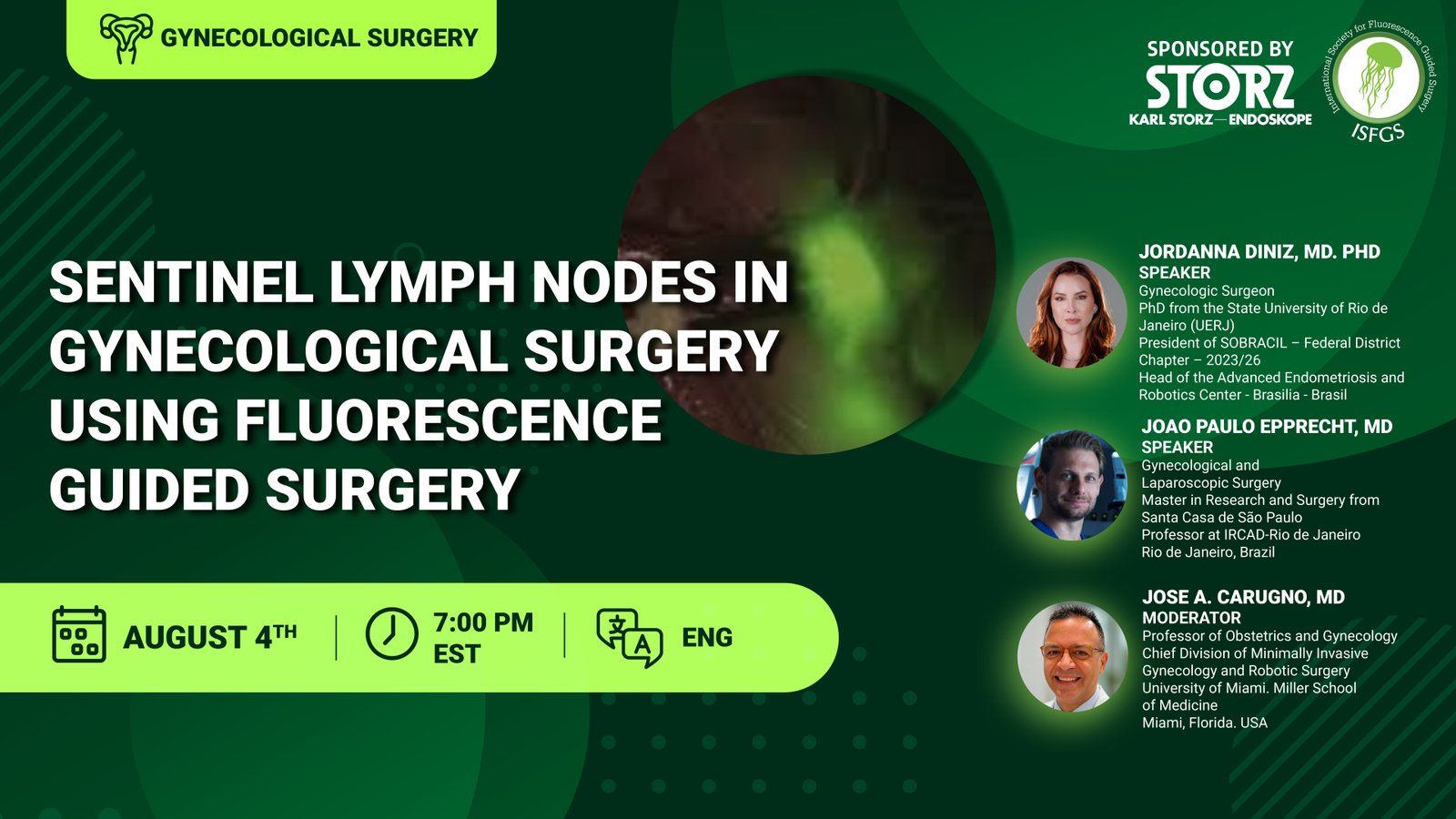
    Indocyanine green (ICG) fluorescence imaging is widely used in cervical cancer surgery for sentinel lymph node mapping and lymphatic visualization. This technique enables accurate identification of nodal drainage pathways, reducing the need for extensive lymphadenectomy and associated morbidity.

    In the EMEA region, standardized dosing and timing protocols help ensure consistent fluorescence imaging, improving detection rates and supporting intraoperative decision-making in gynecologic oncology.

  • Sección:
    • Tabla:
      • Columna1:

        Region of interest

        , Contenido:

        Sentinel Lymph Node (SLN)

      • Columna1:

        Dose

        , Contenido:

        0.25 mL (2.5 mg/mL)

      • Columna1:

        Route

        , Contenido:

        Submucosal peritumorally at 2,4, 8 and 10 o’clock

      • Columna1:

        Injection time

        , Contenido:

        Onset of surgery

      • Columna1:

        First ICG detection

        , Contenido:

        After 10 min

      • Columna1:

        ICG Duration

        , Contenido:

        Remains visible during procedure as it diffuses slowly via lymphatics

      • Columna1:

        Camera requirements

        , Contenido:

        Laparoscope, NIR light source camera

      • Columna1:

        References  (full ref details at end of this guide doc)

        , Contenido:

        8. 2020, Lührs et al.,

EMEA ICG Dosing for Endometrial Cancer

  • Intro:

    Indocyanine green (ICG) fluorescence imaging is widely used in endometrial cancer surgery for sentinel lymph node mapping and lymphatic visualization. This technique enables accurate identification of nodal drainage pathways, supporting precise staging while reducing the need for extensive lymphadenectomy and associated morbidity.

    ICG-based near-infrared fluorescence has demonstrated high detection rates and strong diagnostic performance, improving bilateral sentinel lymph node identification and intraoperative decision-making.

    In the EMEA region, standardized dosing and timing protocols help ensure consistent fluorescence imaging and optimize surgical outcomes in gynecologic oncology.

  • Sección:
    • Tabla:
      • Columna1:

        Region of interest

        , Contenido:

        SLN mapping

      • Columna1:

        Dose

        , Contenido:

        2 mL (1.25 mg/mL)

      • Columna1:

        Route

        , Contenido:

        Combined cervical (1 mL) and submucosal (1 mL) deep (1-2 cm) into the cervical submucosa

      • Columna1:

        Injection time

        , Contenido:

        By time trocars get placed

      • Columna1:

        First ICG detection

        , Contenido:

        After 10 mins

      • Columna1:

        ICG Duration

        , Contenido:

        Remains visible during procedure as it diffuses slowly through lymphatics

      • Columna1:

        Camera requirements

        , Contenido:

        Laparoscope, NIR light source camera

      • Columna1:

        References  (full ref details at end of this guide doc)

        , Contenido:

        13. 2019, Rozenholc et al.,

EMEA ICG Dosing for Complex Pelvic and Abdominal Procedures

  • Intro:

    Indocyanine green (ICG) fluorescence imaging is increasingly used in complex procedures such as hysterectomy, colorectal, pelvic, and abdominal vascular surgery to enhance visualization of anatomy and assess tissue perfusion. This technique enables real-time identification of critical structures—including ureters, vessels, and lymphatics—supporting safer dissection and reducing the risk of intraoperative complications.

    ICG fluorescence also supports evaluation of bowel and organ perfusion, helping surgeons optimize resection strategies and improve surgical precision in highly demanding procedures.

    In the EMEA region, standardized dosing and timing protocols help ensure consistent fluorescence imaging and enhance intraoperative decision-making across multidisciplinary surgical settings.

  • Sección:
    • Tabla:
      • Columna1:

        Region of interest

        , Contenido:

        Ureter localisation

      • Columna1:

        Dose

        , Contenido:

        2.5 mg/mL

      • Columna1:

        Route

        , Contenido:

        5 mL into each ureteric catheter

      • Columna1:

        Injection time

        , Contenido:

        Prior to procedure

      • Columna1:

        First ICG detection

        , Contenido:

        Beginning of surgery

      • Columna1:

        ICG Duration

        , Contenido:

        Remains visible during procedure

      • Columna1:

        Camera requirements

        , Contenido:

        Laparoscope, NIR light source camera

      • Columna1:

        References  (full ref details at end of this guide doc)

        , Contenido:

        14. 2023, Khan et al.,

EMEA ICG Dosing for Vulvar Cancer

  • Intro:

    Indocyanine green (ICG) fluorescence imaging is increasingly used in vulvar cancer surgery for sentinel lymph node mapping and lymphatic visualization. This technique enables accurate identification of inguinal lymphatic drainage pathways, which are critical for staging and prognosis.

    ICG-based near-infrared imaging has demonstrated detection rates comparable to conventional techniques such as technetium-99m and blue dye, while reducing procedural complexity and morbidity associated with extensive lymphadenectomy.

    In the EMEA region, standardized dosing and timing protocols help ensure consistent fluorescence imaging and support precise, minimally invasive surgical approaches in vulvar cancer management.

  • Sección:
    • Tabla:
      • Columna1:

        Region of interest

        , Contenido:

        Lymphatic drainage and SLN

      • Columna1:

        Dose

        , Contenido:

        2 mL (0.125 mg/mL)

      • Columna1:

        Route

        , Contenido:

        Peritumoral injection - four quadrants

      • Columna1:

        Injection time

        , Contenido:

        3-20 hr before procedure

      • Columna1:

        First ICG detection

        , Contenido:

        After 10mins

      • Columna1:

        ICG Duration

        , Contenido:

        Remains visible during procedure as it diffuses slowly via lymphatics

      • Columna1:

        Camera requirements

        , Contenido:

        Open procedure

      • Columna1:

        References  (full ref details at end of this guide doc)

        , Contenido:

        20. 2020, Deken et al.,

ICG Dosing and Timing for Cervical and Endometrial Cancer Surgery

  • Intro:

    Indocyanine green (ICG) fluorescence imaging is widely used in gynecologic oncology to visualize lymphatic drainage and identify sentinel lymph nodes during cervical and endometrial cancer surgery. Proper dosing, injection site, and timing of ICG administration are critical to achieve reliable near-infrared fluorescence imaging and accurate lymphatic mapping.

    This dosing guide outlines recommended ICG administration techniques for cervical and endometrial cancer procedures, including injection into the cervical submucosa and deep stromal tissue, dosage per quadrant, and expected fluorescence detection during sentinel lymph node mapping.

  • Sección:
    • Title: Dosing & Timing Chart, Tabla:
      • Columna1:

        Purpose:

        , Contenido:

        Visualize lymphatic drainage & sentinel lymph node

      • Columna1:

        Injection Type: 

        , Contenido:

        Other

      • Columna1:

        Description:

        , Contenido:

        Administration of the dye should be performed at the level of the cervical submucosa, deep into the stroma. The dye should be distributed into 4 cervical quadrants.

      • Columna1:

        Dilution (25 mg in 10 mL of sterile water - 2.5mg/mL): 

        , Contenido:

        Yes

      • Columna1:

        Requires Flush with Sterile Water: 

        , Contenido:

        No

      • Columna1:

        Proposed Dosage: 

        , Contenido:

        1 mL

      • Columna1:

        Injection Time: 

        , Contenido:

        Prior to dissection & insertion of uterine manipulator

      • Columna1:

        First Indocyanine Green Detection: 

        , Contenido:

        At start of procedure

      • Columna1:

        Indocyanine Green Duration: 

        , Contenido:

        Stable during surgery. Slowly diffuses through lymphatics

      • Columna1:

        Camera Requirements (handheld device, laparoscope or both): 

        , Contenido:

        Both

      • Columna1:

        Tips & Tricks: 

        , Contenido:

        Total 4 mL (1 mL per cervical quadrant).

ICG Dosing and Timing for Ureter Localization

  • Intro:

    Indocyanine green (ICG) fluorescence imaging is increasingly used during abdominal and pelvic surgery to assist in ureter localization and help prevent inadvertent ureteral injury. With near-infrared fluorescence imaging, surgeons can visualize ureteral pathways in real time, improving anatomical identification during complex surgical procedures.

    This dosing and timing chart provides guidance on recommended ICG administration techniques for ureter localization, including injection methods, dosage considerations, and expected fluorescence detection timing to support safe and effective fluorescence-guided surgery.

  • Sección:
    • Title: Dosing & Timing Chart, Tabla:
      • Columna1:

        Purpose:

        , Contenido:

        Visualization of ureters

      • Columna1:

        Injection Type: 

        , Contenido:

        Other

      • Columna1:

        Description: 

        , Contenido:

        Cystoscopy guidance is recommended for retrograde intraureteral dye administration

      • Columna1:

        Dilution (25 mg in 10 mL of sterile water - 2.5mg/mL): 

        , Contenido:

        Yes

      • Columna1:

        Requires Flush with Sterile Water: 

        , Contenido:

        No

      • Columna1:

        Proposed Dosage: 

        , Contenido:

        5 mL per ureter

      • Columna1:

        Injection Time: 

        , Contenido:

        Prior to pelvic dissection

      • Columna1:

        First Indocyanine Green Detection: 

        , Contenido:

        During pelvic dissecction

      • Columna1:

        Indocyanine Green Duration: 

        , Contenido:

        Remains stable during surgery

      • Columna1:

        Camera Requirements (handheld device, laparoscope or both): 

        , Contenido:

        Both

      • Columna1:

        Tips & Tricks: 

        , Contenido:

        Advance ureteral catheter to ensure comprehensive assessment of the ureteral course

ICG Dosing and Timing for Vulvar Cancer Surgery

  • Intro:

    Indocyanine green (ICG) fluorescence imaging is increasingly used in vulvar cancer surgery to visualize lymphatic drainage and identify sentinel lymph nodes. With near-infrared fluorescence imaging, surgeons can track lymphatic pathways in real time, improving sentinel lymph node detection and supporting more precise oncologic staging.

    This dosing chart provides guidance on recommended ICG administration for vulvar cancer procedures, including peritumoral injection techniques, dosage per injection site, and expected fluorescence detection timing to optimize sentinel lymph node mapping during fluorescence-guided surgery.

  • Sección:
    • Title: Dosing & Timing Chart, Tabla:
      • Columna1:

        Purpose:

        , Contenido:

        Visualize lymphatic drainage & sentinel lymph node

      • Columna1:

        Injection Type: 

        , Contenido:

        Other

      • Columna1:

        Description: 

        , Contenido:

        Peritumoral

      • Columna1:

        Dilution (25 mg in 10 mL of sterile water - 2.5mg/mL): 

        , Contenido:

        Yes

      • Columna1:

        Requires Flush with Sterile Water: 

        , Contenido:

        No

      • Columna1:

        Proposed Dosage: 

        , Contenido:

        1 mL

      • Columna1:

        Injection Time: 

        , Contenido:

        At start of procedure

      • Columna1:

        First Indocyanine Green Detection: 

        , Contenido:

        Minutes after administration

      • Columna1:

        Indocyanine Green Duration: 

        , Contenido:

        Stable during surgery. Slowly diffuses through lymphatics

      • Columna1:

        Camera Requirements (handheld device, laparoscope or both): 

        , Contenido:

        Both

      • Columna1:

        Tips & Tricks: 

        , Contenido:

        Total 4 mL (1 mL per tumor quadrant borders)

Ureter Identification in Complex Endometriosis

  • Thumbnail 512x288:
  • Título del video: Ureter Identification in Complex Endometriosis
  • Chapter: EUROPEAN CHAPTER
  • Speakers: Manish Chand MD, PhD
  • Descripción: Dr. Manish Chand, discusses using retrograde ICG for ureter identification in complex endometriosis, with a multidisciplinary team approach of colorectal, urologic, and gynecologic surgeons.
  • Youtube/Vimeo link: https://vimeo.com/1083879232?ts=0&share=copy

ESSO-ISFGS Course on Fluorescence-Guided Surgery

  • Location: 52.1677268183684,4.4777294451289755
  • Descripción del evento:

    Chairs:

    Sven Mieog, Leiden University Medical Center, Leiden, NL

    Karol Polom, Wielkopolska Cancer Center Poznań, Poznań, PL

    Alexander Vahrmeijer, Leiden University Medical Center, Leiden, NL

    Luigi Boni, IRCCS – Ca’ Granda, Policlinico Hospital of Milan, Milan, IT 

    During this course participants will obtain a thorough knowledge of the fundamentals and state-of-the-art applications of fluorescence imaging of tumours (primary, metastases, lymph nodes), sentinel lymph nodes and lymphatics, vital structures (bile ducts, ureters, nerves) and perfusion assessment of organs and tissues. Besides traditional fluorescent, fluorescent dyes, participants will discover and work with novel antibody-/peptide-/nanobody-based targeted fluorescence-guided surgical navigation. They will experience the possibilities and limitations of this intra-operative technique also in relation to open, laparoscopic and robotic approaches.

    Open to

    Oncologic surgeons, gynaecologists, urologists, thoracic surgeons, plastic and reconstructive surgeons, gastro-intestinal surgeons and vascular surgeons, researchers in the field of image-guided-surgery, and those who are in training for these medical specialties with an interest in the fundamentals and ap-plications of fluorescence-guided surgery.

    Educational methods

    • Hands on session testing different fluorophores and fluorescencecontrast agents and their behaviour in different situations withvarious commercially available and experimental imaging systems.
    • Plenary lectures

    Main topics

    • Fluorescence imaging of lymphatics & SLN
    • Fluorescence imaging of tissue perfusion
    • Imaging of biliary tract and ureters
    • Imaging of tumor tissue
  • Title: ESSO-ISFGS Course on Fluorescence-Guided Surgery
  • Date: 2024-06-06
  • Untill: 2024-06-06
  • Website: https://www.essoweb.org/courses/esso-course-on-fluorescence-guided-surgery-2024/
ISFGS Past Events Back Main Menu Group Picture ESSO Fluorescentie IMG 0770 Leiden, 6 June Exciting day 1 of the course at the LUMC!We welcomed 70 participands from 13 countries for the ESSO-ISFGS course. Today was all about present-day usage of fluorescence guided surgery and hands-on learning. We kicked off with an in-depth exploration of fluorescence imaging...

Preventing Ureteral Injuries Using FIGS

  • Thumbnail 512x288:
  • Congreso: 9th Annual Meeting - Miami 2024
  • Título del video: Preventing Ureteral Injuries Using FIGS 
  • Speakers: Homero Rodriguez Zentner, MD
  • Youtube/Vimeo link: https://vimeo.com/923716400?share=copy
  • Date: 2024-02-25
Preventing Ureteral Injuries Using FIGS  Homero Rodriguez Zentner, MD 9th Annual ISFGS Meeting - Miami 2024

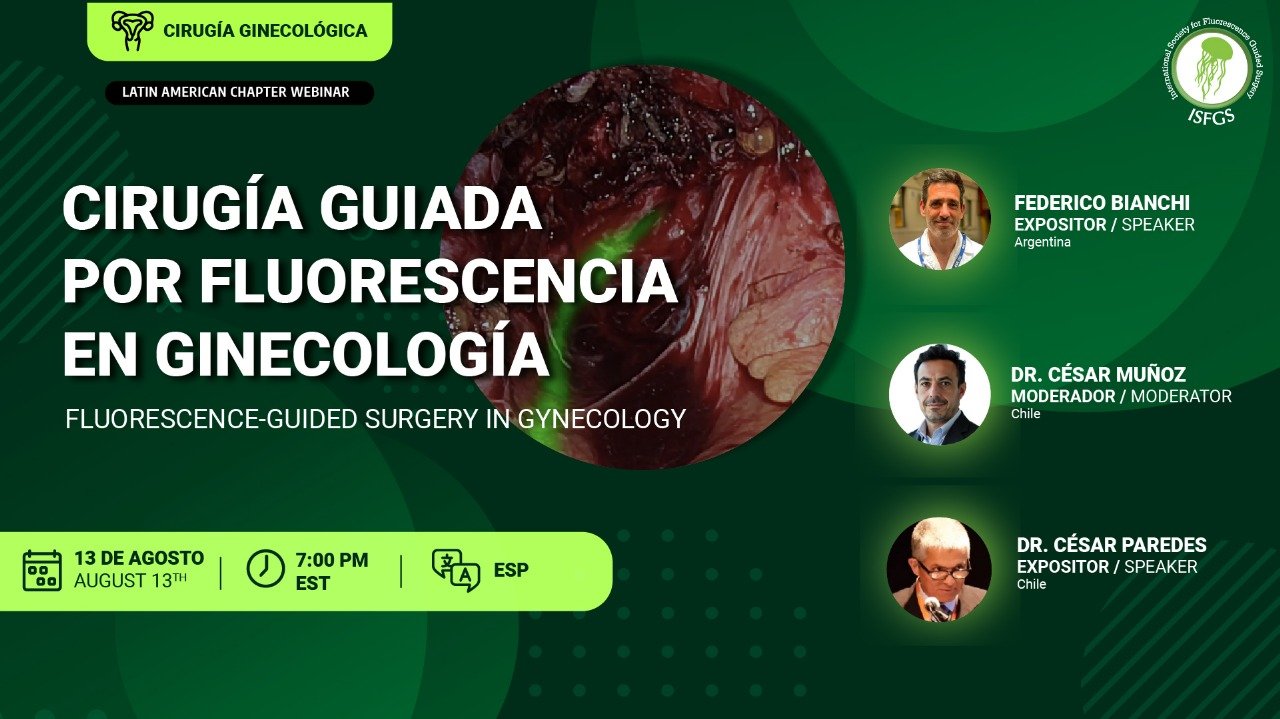
Applications of Fluorescence Guided Imaging in Gynecologic Surgery

  • Thumbnail 512x288:
  • Título del video: Applications of Fluorescence Guided Imaging in Gynecologic Surgery
  • Chapter: EUROPEAN CHAPTER
  • Speakers: Andrea Papadia
  • Descripción: The webinar describes common applications of fluorescence guided surgery in gynecologic with a special attention to the applications in the sentinel lymph node mapping for uterine cancers.
  • Youtube/Vimeo link: https://www.youtube.com/watch?v=YCN8gXiFNYg&t=39s
  • Date: 2021-03-10
Applications of Fluorescence Guided Imaging in Gynecologic Surgery EUROPEAN CHAPTER Andrea Papadia The webinar describes common applications of fluorescence guided surgery in gynecologic with a special attention to the applications in the sentinel lymph node mapping for uterine cancers. 10-03-2021

Gynecological Uses of Fluorescent Guided Imaging Using ICG

  • Thumbnail 512x288:
  • Título del video: Gynecological Uses of Fluorescent Guided Imaging Using ICG
  • Speakers: Maria Hincapie, Ceana Nezhat
  • Descripción: This video portrays the applications of fluorescence technology in laparoscopic and robotic surgery. Special attention is placed on specific steps for preparation of indocyanine green (ICG) and its use in sentinel lymph node biopsy, ureter identification, endometriosis lesion mapping and bowel resection and anastomosis.
  • Youtube/Vimeo link: https://youtu.be/yz7-sFBci7A?si=6emsQztYePXxLrMq
  • Date: 2021-06-07
Gynecological Uses of Fluorescent Guided Imaging Using ICG This video portrays the applications of fluorescence technology in laparoscopic and robotic surgery. Special attention is placed on specific steps for preparation of indocyanine green (ICG) and its use in sentinel lymph node biopsy, ureter identification, endometriosis lesion mapping and bowel resection and anastomosis. Suggested complementary reading: Nezhat CH, Odunsi T. Intelligent light and florescence-guided surgery augmenting the surgeon's visual perception. Fertil Steril. 2020 Nov;114(5):980. doi:...